What information defines a paddle construction?
At minimum, identify the reference model, blade material and dimensions, shaft material and diameter, connection or section format, overall length, finish and the approved sample reference.
Materials & construction / Specification guide
“Carbon,” “composite” or “adjustable” does not describe a complete paddle. Build the product brief around the blade, shaft, connection and finish, then confirm the available combination against a reference model.
The short answer
State the material of each component separately. Keep the model, dimensions, connection and finish beside those materials so the quotation, sample and production reference describe the same build.
Available choices depend on the reference model. A catalogue option should not be read as permission to combine every blade, shaft and connection.
Construction anatomy
Move from the product shape to the production detail. Each field should point back to a model, drawing or approved physical sample.
Start with the buying sequenceRecord the model, profile, dimensions and blade material together. A material name without the molded or laminated blade reference is incomplete.
Specify material, diameter, shape and any fixed or adjustable requirement. Shaft options vary by paddle family and model.
Confirm section count, adjustment range, joint position and packed-length limit before the connection format is approved.
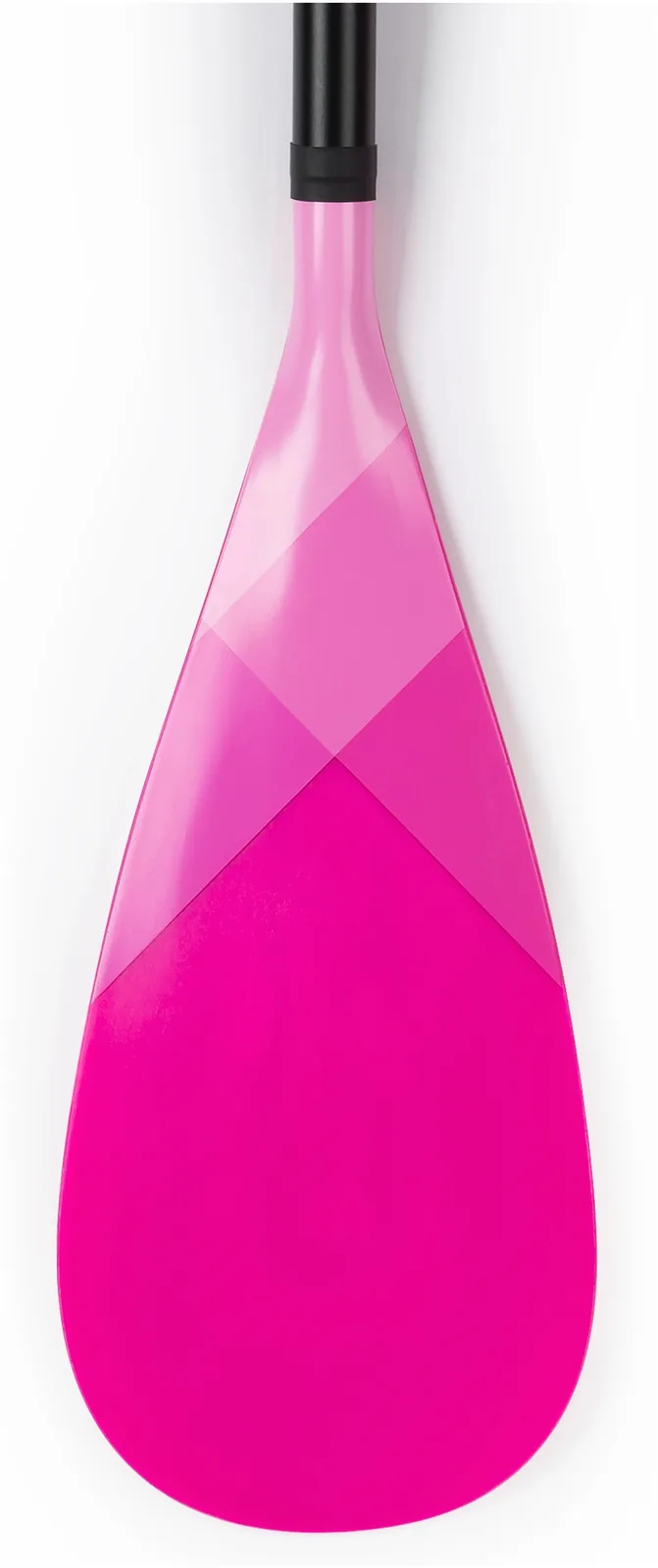
Define color, graphics, surface appearance, edge treatment and acceptable visual reference on the sample.
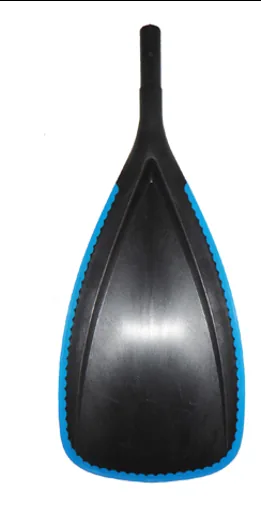
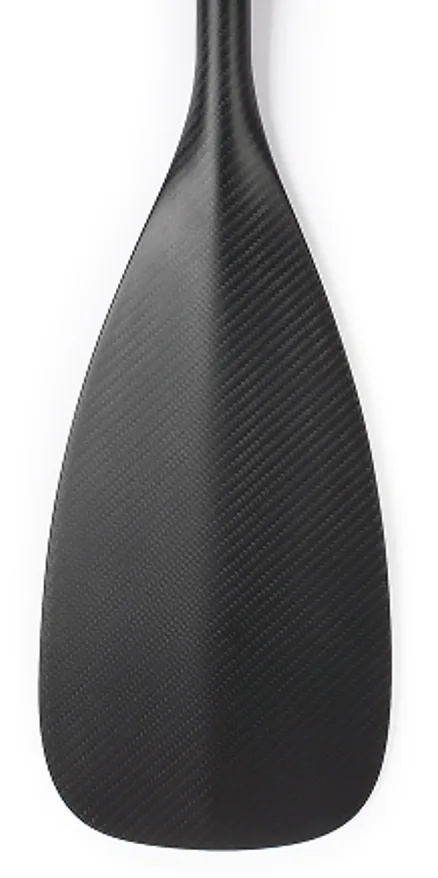
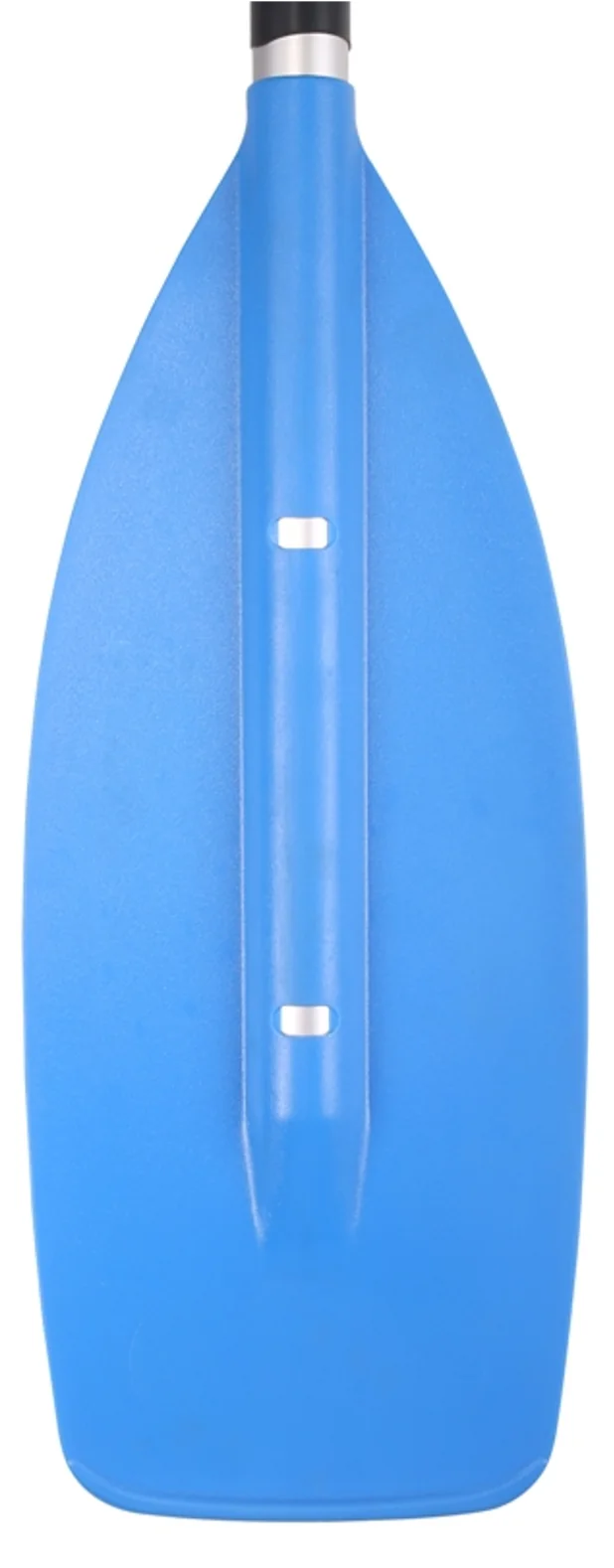
Visible construction references
These examples show why the edge, molded profile, laminate appearance and shaft-to-blade transition should be reviewed as separate visual details. Final availability remains model-specific.
Material terminology
This is a specification vocabulary, not a universal performance ranking. Material suitability and supported combinations must be checked against the selected model.
Use “full carbon” only when the approved blade and shaft are both carbon. A carbon-look finish is not proof of carbon construction.
Multiple SUP, kayak, canoe and kids paddle platforms
Model, blade dimensions, reinforcement description, color and surface reference
Selected kayak and canoe blade platforms
Exact model, material direction, profile, graphics and approved sample
Selected SUP blade platforms
Blade model, edge color, edge coverage and sample appearance
Selected kayak, SUP, canoe and dragon boat platforms
Blade and shaft materials separately; do not infer a full-carbon build
Availability depends on the selected paddle model
Diameter, shape, material, section format, adjustment and finish
Current catalogue directions
The rows below summarize materials represented in the current catalogue. Open the product page to connect the material to a specific model and dimension.
| Family | Blade direction | Shaft direction | Configuration note | Models |
|---|---|---|---|---|
| SUP | PP + fiber; selected nylon + fiber, rubber-edge, fiberglass and carbon directions | Aluminum, fiberglass or carbon on listed models | Adjustment ranges and section formats are model-specific | Review specs |
| Kayak | PP, PP + fiber, ABS, PC, fiberglass or carbon across the range | Aluminum, fiberglass or carbon; selected straight or bent directions | Confirm section count and packed length with the model | Review specs |
| Canoe | PP, ABS, fiberglass and carbon directions across selected models | Model-specific aluminum, fiberglass, carbon or other listed construction | Fixed and adjustable platforms are both represented | Review specs |
| Dragon boat | Carbon on the current LZ04–LZ07 range | Ø29 mm fiberglass or carbon | 115–130 cm options depend on the selected model | Review specs |
Important: The table describes catalogue directions, not every possible combination. Confirm the exact blade, shaft, connection and finish for the reference model before quotation.
Specification worksheet
Use this minimum set of fields when requesting a sample or quotation. Add buyer-specific tests only with a defined method, sample condition and acceptance criterion.
Send a construction briefFrom shortlist to production reference
Choose the product family and reference model, then identify the required component directions.
Review dimensions, materials, assembly, finish, artwork and any defined inspection points.
Use the approved sample and written specification as the shared production and packing reference.
Materials & construction FAQ
Clear component naming prevents appearance, material and assembly requirements from being merged into one ambiguous label.
At minimum, identify the reference model, blade material and dimensions, shaft material and diameter, connection or section format, overall length, finish and the approved sample reference.
No. Surface appearance, graphics and structural material are separate specification fields. Carbon construction should be stated only when the relevant component is confirmed as carbon fiber.
Use full carbon only when both the blade and shaft are confirmed as carbon for the quoted and approved configuration. If only one component is carbon, identify the blade and shaft separately.
No. Available combinations depend on the product family, reference model, connection and production feasibility. Shortlist a model first, then confirm the supported combination during quotation and sampling.
Not as a universal rule. The appropriate construction depends on the product brief, model, dimensions, target market, price direction and required validation. Any performance claim should be tied to a defined test method and acceptance criterion.
Check the model and dimensions, component materials, assembly and adjustment, surface and edge condition, artwork, color, packaging and any buyer-defined inspection or testing points.
Need a model-specific construction review?
Share the paddle family, reference model or sample, blade and shaft direction, connection, finish, target quantity and packaging requirements. Aaron Deng will coordinate the first product review.