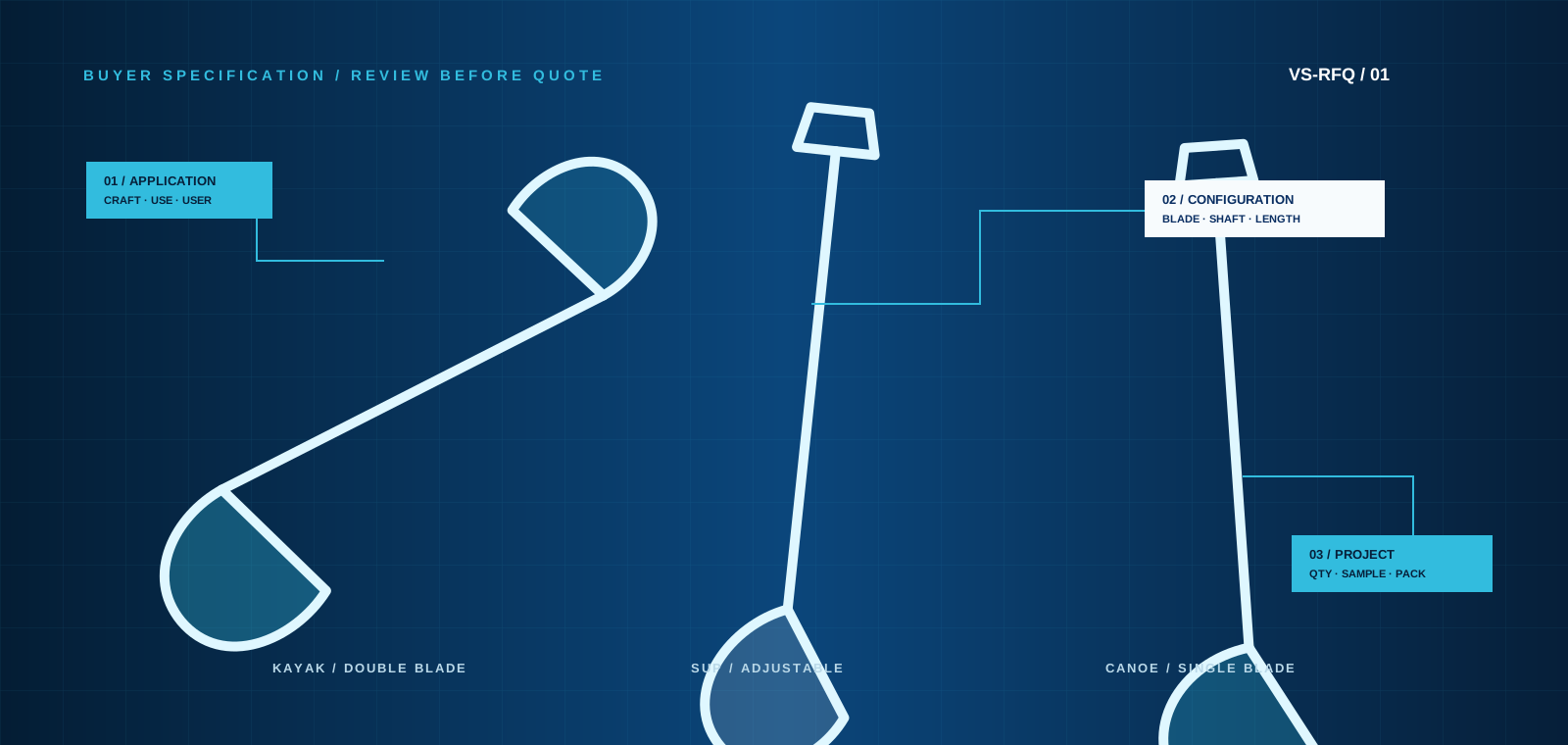
Many paddle inquiries begin with a product photo and one question: "What is the price?" The photo may reveal the general style, but it says little about the craft, dimensions, shaft construction, connection, packing length or what the buyer plans to approve.
Start with the application and paddle family, then define the whole product before comparing prices. The brief should cover the blade, shaft, handle, connection, length, customization, quantity, sample plan and packaging. A material name or a preferred color is not enough on its own.
When I open a new request, I sort the information into three groups: fixed requirements, preferences and open questions. That simple split keeps early discussions honest. It also gives importers, distributors and private-label brands a brief that a supplier can price and sample without quietly filling in the gaps.
01 / Decision order
What should be decided before contacting a paddle supplier?
Decide what the paddle must fit and who will buy or use it. The craft and intended use come first. User group, destination market and price position then narrow the model choices before the discussion moves to materials or artwork.
A recreational kayak paddle, an adjustable SUP paddle packed with a board and a dragon boat club paddle are all paddles. Beyond that, they have little in common. Blade shape, grip, length, connection and packing method change with the application, so appearance is a poor place to start.
Try to describe the application in one sentence. For example: "A three-piece adjustable SUP paddle for an inflatable board package sold through European outdoor retailers." That tells the supplier far more than "carbon-look paddle required." It gives the craft, basic format, sales channel and a clue that carton length matters.
02 / Product family
Which paddle family fits the intended application?
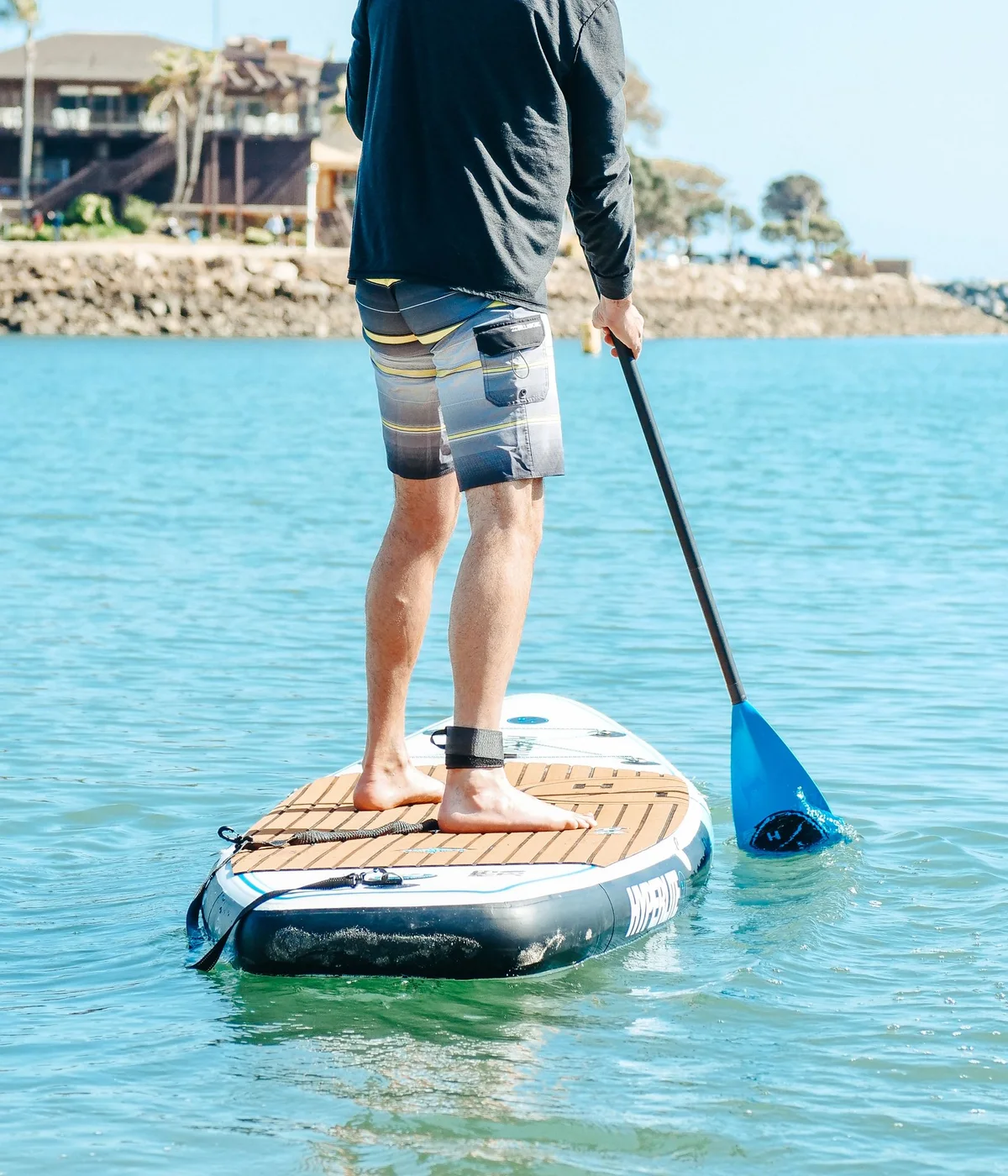
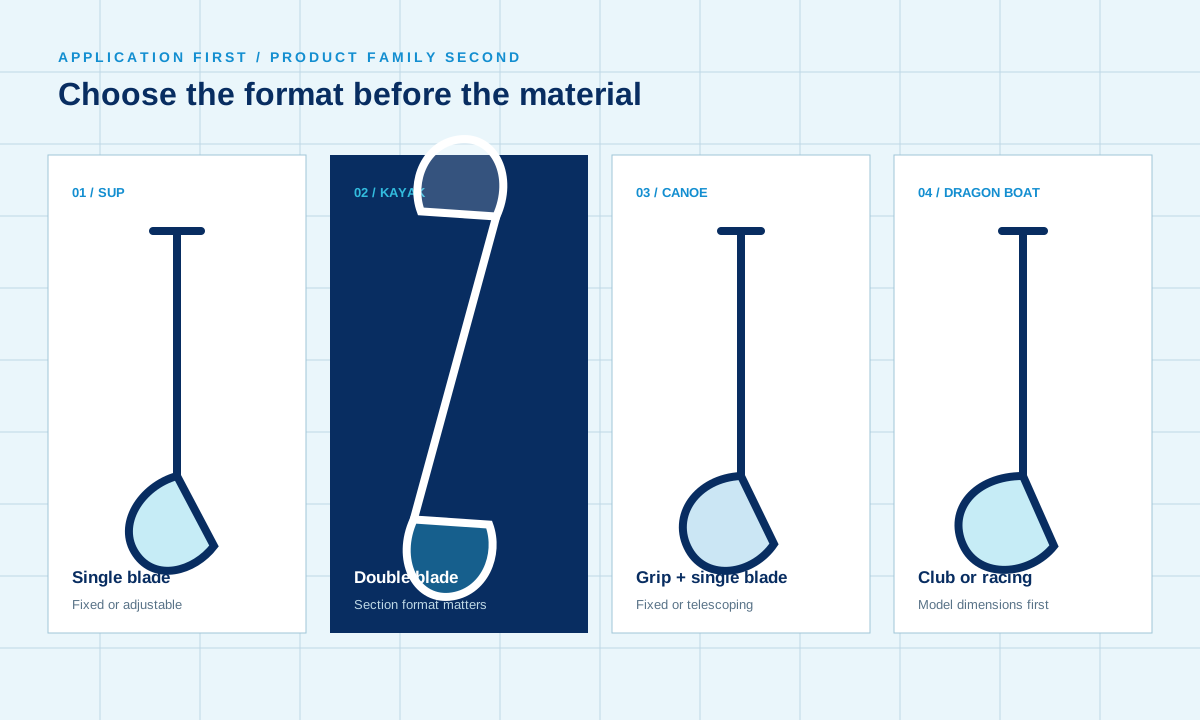
Match the paddle format to the craft before comparing models. SUP, kayak, canoe and dragon boat paddles have different blade and handle arrangements. Each family also brings its own sizing, construction and packing questions.
| Paddle family | Start with | Confirm next | Useful internal reference |
|---|---|---|---|
| SUP paddle | Fixed or adjustable use; board package and user range | Length range, section count, blade, shaft and handle | SUP model specifications |
| Kayak paddle | Kayak type, width, seating position and intended use | Overall length, blade pair, shaft, ferrule and piece count | Kayak model specifications |
| Canoe paddle | Craft, paddling position and fixed or adjustable direction | Grip, blade, shaft, overall length and telescoping range | Canoe model specifications |
| Dragon boat paddle | Club, training or racing program and model direction | Model dimensions, blade construction, shaft and finish | Dragon boat model specifications |
Use the table as an order of work, not as a universal fit chart. The Sizing & Selection guide explains which craft, user and model measurements still need checking. For competition programs, read the 2025 ICF Dragon Boat Competition Rules before fixing the dimensions.
03 / Specification teardown
Which paddle specifications can change the quotation?
Ask the supplier to quote the complete paddle, not a single material label. Cost and review work can change when the blade, shaft, connection, finish or assembly process changes.
Blade
Name the reference profile, dimensions and preferred material. PP, reinforced polymer, ABS, fiberglass and carbon options depend on the model. A construction that works for one blade may not suit another.
Shaft
State the material and diameter if known. Add whether the shaft should be round or oval, straight or bent, and whether there is a weight target. A carbon shaft does not make the complete paddle full carbon.
Length & adjustment
Give the overall length, the listed model length or the adjustment range. If none is decided, share the craft dimensions and intended user range. That is more useful than guessing a number.
Connection & sections
State whether the paddle is one, two, three or four pieces. Include the lock or ferrule, blade angle and any carton-length limit. These choices affect both assembly and packing.
Grip, handle & finish
For a single-blade paddle, name the handle style. Also describe the color, surface or edge treatment. If the terminology is unclear, a drawing or physical sample is safer than a long email explanation.
Artwork & packaging
Send the logo file, color reference, print area, label content and packaging request. The blade material and production process determine which artwork methods are practical.
I read the blade, shaft, connection and packing format as one product. For example, changing the section count may require a different connection and a different carton, even if the blade stays exactly the same.
Write a unit beside every dimension and use one convention throughout the sheet. The NIST guidance for writing SI units is a useful neutral reference for number and unit formatting.
The Paddle Materials & Construction guide covers the component vocabulary in more detail. The final combination, tolerances and finish still need confirmation against the chosen model and approved sample.
04 / RFQ checklist
What should a paddle request for quotation include?
Keep the product definition and commercial scope in separate parts of the RFQ. The supplier can then check the model without losing quantity, timing or sample requirements inside a long product description.
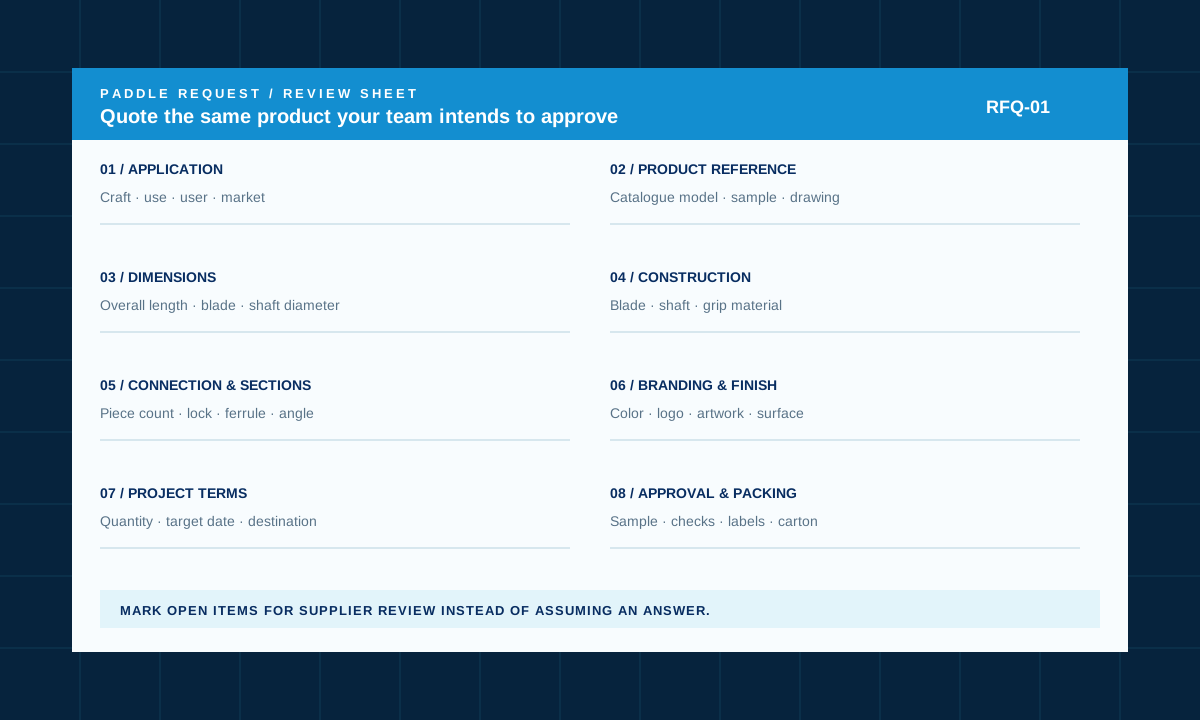
- Application: craft, intended use, target user and sales market.
- Reference: catalogue model, existing product, drawing or physical sample.
- Dimensions: overall length or range, blade size, shaft diameter and packing limit where relevant.
- Construction: requested blade, shaft, grip and edge materials.
- Configuration: piece count, connection, adjustment, blade angle or handle format.
- Customization: color, artwork, logo placement, labels and surface finish.
- Commercial scope: target quantity, destination, sample need and requested timing.
- Approval scope: reference sample, inspection points, buyer-supplied test method and packaging.
05 / Supplier review
What can remain open in the first inquiry?
It is fine to leave a decision open, as long as the RFQ says so. An open question invites a recommendation. An empty field often becomes an assumption, and that assumption may end up in the price.
You may know the application, quantity and price position but still need help with the blade platform or shaft construction. Share the constraints and ask the supplier to compare sensible options. A useful reply explains what changes with each option and what still needs checking on a sample.
- Paddle family and intended application
- Target quantity or realistic quantity range
- Mandatory compliance, packing or channel constraints
- Any non-negotiable reference dimensions
- Closest catalogue platform
- Material direction within the target position
- Exact artwork method
- Final sample checks and packing optimization
A supplier cannot make a sensible model recommendation without the intended use and a realistic quantity. Both affect the available platform and customization route. For products sold in the United States, the CPSC's manufacturing best-practice guidance also calls for detailed specifications, supplier controls and records that demonstrate due care.
06 / Like-for-like comparison
How should buyers compare paddle quotations?
Read what each supplier has included before comparing unit prices. Two quotations are not equivalent when the shaft, section format, artwork method, sample work or packaging differs.
| Check | Question to ask | Why it matters |
|---|---|---|
| Model basis | Is the same reference model or drawing being quoted? | Similar silhouettes may use different dimensions or tooling. |
| Construction | Are blade, shaft, grip and connection materials identified separately? | One material label can hide a mixed construction. |
| Customization | Which color, artwork and finish processes are included? | Appearance and setup scope can differ. |
| Sample | What sample is included and what will it establish? | A visual sample is not automatically a production reference. |
| Packaging | Are labels, inner protection and carton configuration aligned? | Section count and carton length affect the packing basis. |
| Commercial terms | Are quantity, destination, timing and validity based on the same assumptions? | Different project bases make the total offer misleading. |
07 / Approval control
What should be approved before paddle production?
Approve a physical reference and a written specification that describe the same paddle. Together, they should identify the dimensions, construction, color, artwork, connection, packaging and agreed inspection or test points.
A quotation opens the commercial discussion, but it is not a production specification. Any change made during sampling should be written into the approved document before the order moves ahead. If testing is required, define the method, sample condition, acceptance criteria and report. The applicable rules depend on the product and destination market. For U.S. programs, the CPSC sets out importer and manufacturer responsibilities in its general-use product testing and certification guidance.
When a project reaches production review, I put the approved sample beside the written specification. If the sample changes, the document must change with it. Otherwise, the production team is left with two different answers.
Vision Sports carries that approved reference through component preparation, assembly, product checks and packing. The paddle production process shows the working stages and explains where general factory guidance ends and project-specific requirements begin.
08 / Buyer questions
Frequently asked questions about paddle quotations
Can a supplier quote a paddle from a photo?
A photo is usually enough to recognize the paddle family. It is rarely enough to price the product accurately because it does not confirm length, blade dimensions, materials, shaft construction, connections, artwork or packaging. Use the photo as a reference and list what is still unknown.
Do all specifications need to be final before the first inquiry?
No. Mark each requirement as fixed, preferred or open. If the intended use and commercial scope are clear, the supplier can recommend a suitable starting model without turning an early assumption into an approval.
Should buyers request the lowest price first?
Not yet. First make sure each quotation covers the same paddle family, dimensions, construction, customization, sample work and packaging. A lower number means little when the suppliers are pricing different products.
What should be approved before bulk production?
Approve a physical sample and a written specification that describe the same finished paddle, artwork and packing method. Add the inspection or test points agreed for the project. Production should follow those records, not an informal email description.
Conclusion
What is the fastest path to a reviewable paddle quote?
Send one clear application sentence, a relevant product reference and the eight RFQ information groups.
Mark every field as fixed, preferred or open. The supplier can then review one coherent product, while your team gets a consistent basis for sampling and price comparison.
If you do not have a model yet, begin with the Vision Sports paddle families. If you already have a sample, drawing or specification, use the inquiry form to show what should stay the same and what you want to change.
Send your product requirements