Two paddlers can be the same height and still need different paddles. Put one in a narrow touring kayak and the other in a wide recreational kayak, then change the seat height, blade and stroke. The working reach is no longer the same.
Choose paddle length from the craft, paddling position, target user range, intended use and available model. Height helps describe the user, but it cannot account for the distance to the water, the blade format or the adjustment and packing limits built into the product.
When I receive a height-only request, I do not turn it into a length immediately. I first ask where the user sits or stands, how wide the craft is and whether the buyer needs one fixed setting or a range. Those answers usually narrow the choice faster.
01 / The incomplete shortcut
Why is user height not enough to choose paddle length?
User height says nothing about how far the paddler must reach from the working position to the water. Craft width, seat or standing height, posture, blade size and stroke style can all change that distance.
A height chart can be a convenient retail starting point when the product and use are already fixed. It becomes unreliable when a buyer applies the same chart across recreational kayaks, touring kayaks, SUP packages and single-blade paddles. The missing variables have moved, even if the user has not.
The American Canoe Association's Paddle Safe guidance lists kayak width, blade size and the paddler's size among the factors that influence kayak paddle length. It also treats trial and adjustment as part of finding a comfortable fit. That is a useful reminder for sourcing teams: a number chosen on paper still needs a product context.
02 / Measurement path
The five inputs that change practical paddle length
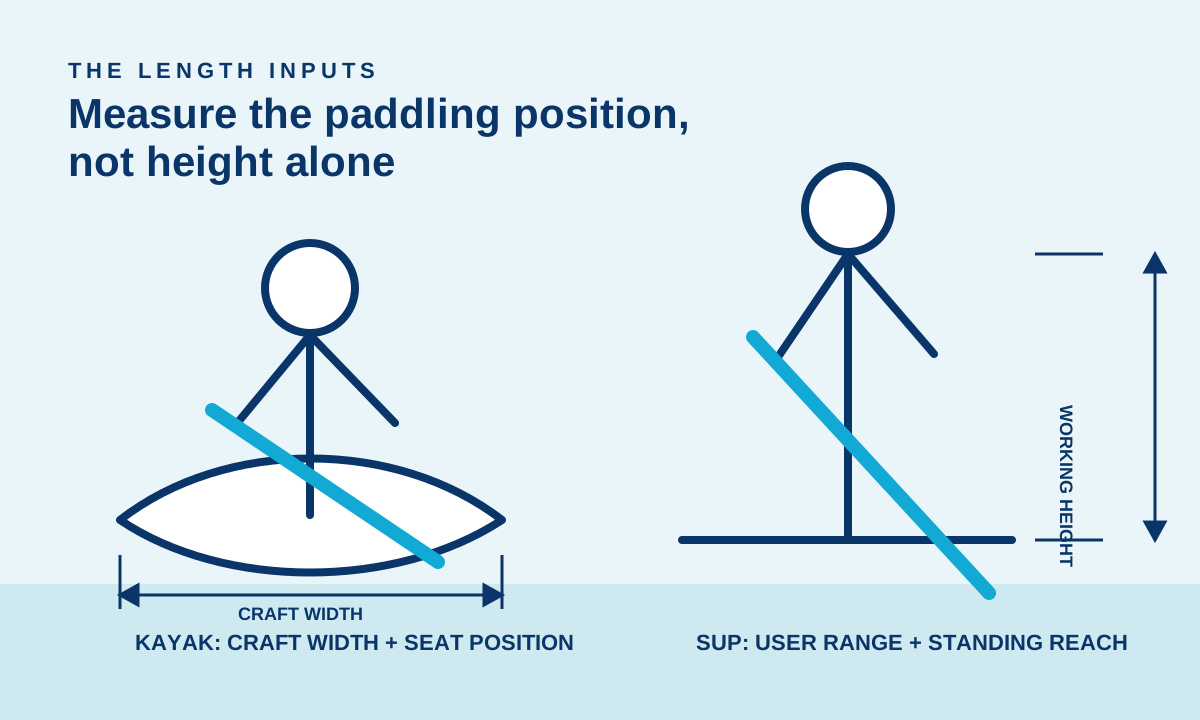
Record five inputs in order: craft, paddling position, user range, intended use and model constraints. This sequence separates the application from the catalogue number and exposes any assumption that still needs a sample check.
- 01
Craft
Name the paddle family and record the dimensions that affect reach. For a kayak, width at the paddling position matters more than a generic maximum width taken elsewhere on the hull.
- 02
Paddling position
State whether the user sits low, sits above the water or stands. Seat and deck geometry can change the path between the hands and the water.
- 03
Target user range
Define the shortest and tallest intended users and any important reach or age constraints. A retail product needs a range, not an imaginary average customer.
- 04
Intended use
Recreation, touring, racing, whitewater, rental and board-package use can call for different stroke positions and product formats.
- 05
Available model
Check whether a real blade, shaft and connection platform supports the proposed length. A theoretical number is not useful if the selected construction cannot provide it.
The Paddle Sizing & Selection guide lists the current Vision Sports catalogue references and the inputs buyers should collect before shortlisting a model.
03 / Application comparison
How does length selection differ between kayak, SUP, canoe and dragon boat paddles?
Each paddle family starts from a different working position and product format. Kayak paddles use two blades across a seated craft, SUP paddles work from a standing position, while canoe and dragon boat paddles pair one blade with a grip.
| Family | Start with | Length decision | Model constraint |
|---|---|---|---|
| Kayak | Craft width, seat position, use and target user | Overall fixed length or a limited adjustment direction | Blade pair, feather, shaft and section format |
| SUP | Standing user range, board package and use | Fixed setting or adjustment window | Handle, lock, shaft overlap and section count |
| Canoe | Seat or kneeling position, craft and stroke | Fixed overall length or model-specific range | Grip, shaft length, blade and telescoping platform |
| Dragon boat | Club or competition program and selected model | Approved model dimension for the program | Blade profile, governing rules and team requirements |
Why the blade and shaft still matter
Length does not work independently from the rest of the paddle. A change in blade profile can alter how the paddle is used, while shaft diameter, stiffness, bend, grip and feather affect the configuration the buyer is actually approving. This is one reason a familiar length can feel different when it is transferred to another model.
I prefer to compare two complete paddles rather than two length numbers. If the buyer likes an existing reference, I record its overall length, blade, shaft, connection and working position together. That makes the reference useful even when the new product uses a different material or section format.
Most current Vision Sports kayak models are listed at 220 cm, but that catalogue value is not a universal prescription. Compare the complete format on the kayak paddle specifications page before treating length as a fixed buying decision.

Paddle UK's Paddlesafer guidance starts with the craft and type of paddling, then adds personal requirements, blade shape, shaft and adjustment. That order is useful for an OEM brief because it keeps the length connected to the rest of the paddle.
04 / Range decision
Fixed length and adjustable range solve different programs
Use a fixed length when the application and target user are stable; use an adjustable range when one model must cover a defined group. Neither choice is automatically better.
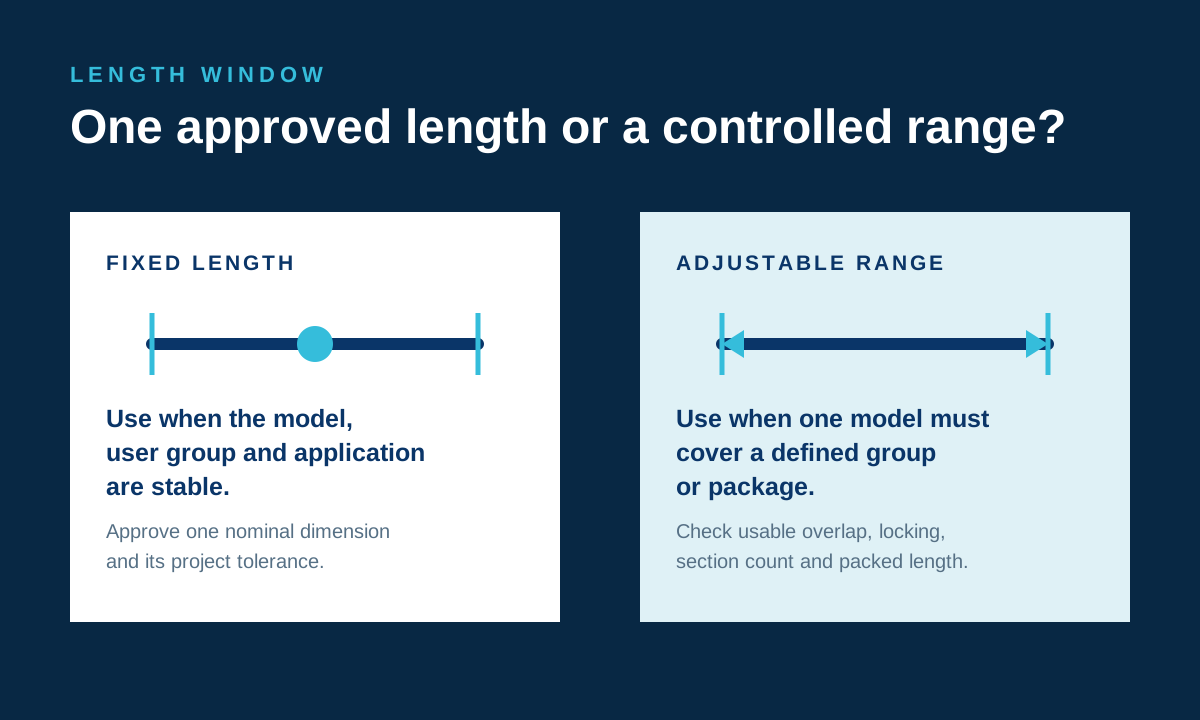
For an adjustable SUP program, I look for usable overlap rather than the widest possible headline range. The shortest setting still needs enough shaft engagement for the selected lock, while the longest setting must remain practical for the intended user and application.
The current adult models on the SUP paddle specifications page are listed at 160 to 210 cm. A buyer should still confirm the chosen model, the operating range needed for the project, the section format and the packed length.
Approve one reference
Record the nominal length, how it is measured and the agreed tolerance on the final specification.
Approve the working window
Check the minimum and maximum settings, lock operation, markings and shaft overlap on the sample.
Check the packed product
Confirm section count, longest packed component, connections and final carton basis together.
05 / Buyer input sheet
What should buyers record before asking for a length recommendation?
Send enough information to reproduce the selection logic, not only the final number. A supplier should be able to see which inputs are measured, which are preferences and which still need a recommendation.
Paddle family, craft, intended use and sales channel.
Craft width, seat or standing position and any relevant geometry.
Shortest and tallest intended users plus known reach constraints.
Reference model, blade, shaft, fixed or adjustable format and sections.
Target quantity, packed-length limit, sample need and destination.
Length measurement method, settings to check and written specification.
If the rest of the paddle is still open, use the paddle RFQ preparation guide to connect length with the blade, shaft, handle, connection, artwork, quantity and packing requirements.
06 / Physical confirmation
A sample turns the proposed length into a production reference
Check the sample in the intended craft or a documented equivalent, then record the exact configuration that was reviewed. A sample trial should confirm the length together with the blade, shaft, connection and user range.
Set the context
Use the intended craft, seating or standing position and representative users. Record what was actually used.
Try the relevant settings
For an adjustable model, check the low, high and expected everyday settings. Do not judge the range only at its midpoint.
Freeze the reference
Write the approved dimension or range, measurement method and product configuration into the specification.
State where the measurement begins and ends. For a fixed paddle, that may be the complete overall length from the handle or blade end to the opposite tip. For an adjustable model, record the settings and the marks used during review. A number without a measurement method can still produce two different answers.
A sample can show whether the proposed setup is practical, but it does not create a universal ergonomic rule. User preference and technique vary. For competition or club programs, equipment rules may also narrow the acceptable product direction. Check the current discipline documents in the International Canoe Federation rules library before approving a competition paddle.
07 / Buyer questions
Frequently asked questions about paddle length selection
Can user height determine paddle length on its own?
No. Height is one input, but the craft, paddling position, intended use, blade and available model matter as well. A useful recommendation needs enough context to show where the user's hands and blade will work relative to the water.
What should a buyer send for a kayak paddle length review?
Send the kayak type, width at the seat, seat position, intended use, target user range, reference model and any section or packed-length limit. If the market already uses a familiar length, include it as a reference rather than presenting it as a universal rule.
When is an adjustable SUP paddle more practical than a fixed paddle?
An adjustable model can suit a board package, rental fleet or mixed user group when its usable range covers the intended users. The lock, shaft overlap, section count and packed length still need review on the selected model.
Should the catalogue length become the production specification?
Not automatically. A catalogue value helps shortlist a model. The order specification should identify the approved nominal length or adjustment range, the measurement method, any agreed tolerance and the matching physical sample.
Does a shorter packed length mean a better paddle?
No. More sections can reduce carton length, but they also change the connections, assembly and product feel. Treat packed length as one commercial constraint and review it with the complete paddle configuration.
Conclusion
What is a defensible paddle length decision?
A defensible length can be traced back to the craft, working position, target users, intended use and an available product model.
Record those inputs, decide whether the project needs one fixed length or a controlled range, and check the result on a representative sample. The approved number should be the end of the selection process, not the first guess.
Send your sizing inputs